Contact Us

Use the form on the right to contact us.

You can edit the text in this area, and change where the contact form on the right submits to, by entering edit mode using the modes on the bottom right. 


Silver Spring, MD
United States

888-577-9342

Stories To Tell is a full service book publishing company for independent authors. We provide editing, design, publishing, and marketing of fiction and non-fiction. We specialize in sophisticated, unique illustrated book design.

Stories To Tell Books BLOG

Book Design and Layout

Nan Barnes

If you have finished writing and revising your memoir or family history book, you may imagine that completing your manuscript means you're done. But authors who self-publish have a a final critical step to take before publication – book design. Book design combines decisions about elements of the book, style, organization, illustrations, layout, and cover design. The choices you make about the design of your book will give it the unique character you wish to create. Here are some of the things to consider when designing your book:
Read More

Finding Meaning in Family Photographs

Biff Barnes

What does that family photo mean? That’s not a question many people ask themselves as they create their family history book. But they should. “Family photographs can be considered cultural artifacts because they document the events that shape families' lives,” said Charles Williams, Online Features editor of the St. Louis Post Dispatch. “…In many cases, photographs are the only biographical material people leave behind after they die.”
Read More

The Art of Storytelling

Biff Barnes

One of the most famous pieces of advice that professional writers will share is, “Show, don’t tell.” But what does this really mean? Essentially, to describe, and let the story unfold, so that the reader can experience it as you did, firsthand. This dictum is directed at writers, but whether you record your stories or write them, the same techniques apply. In fact, oral storytellers are more likely to tell a story well, naturally.
Read More

A New Year’s Insight

Nan Barnes

Recently, I was asked to write an article for a publisher’s newsletter. The topic was “What inspires you each day?” Each day? I’m sorry, but I cannot be inspired every day. However, I can be motivated, even resolved, to work at my long-term goals every day. I am good at New Year’s Resolutions. Those of you who want to write and publish a book need to stick to your resolutions, too. It is good work, but it surely won’t get done in a day.

I think “inspiration” is often misunderstood. In popular culture, inspiration is a rare lightning strike, and creative people seem to discover or “channel” their most brilliant work in those moments of inspiration. Me, I come from the other school of thought, that old 98% perspiration theory. My attitude toward work is a more earthly, manageable and mechanical phenomenon. Every day, I sit down and get to work, whether I feel inspired or not.  Despite my pragmatism, my daily work can be very artful and creative.

I have always been an avid reader, and I studied English in school because I wanted to get paid to read and write. I quickly recognized that I was different from the other writers. I don’t imagine I “have a novel in me”, and I don’t have one big idea or vision I feel driven to share with the world. (Although I do have lots of little ones – do they count?)  Instead, my joy in reading, and my joy in writing, has to do with deconstruction. People build books, I take them apart. I love analysis, particularly of text and ideas, and that has made me well suited to be an editor.

 (Photo courtesy of Larry Johnson, Creative Commons)

Analyzing a book is fun, but even more fun is imagining the better book it might be. It changes the way I read and think about books. It also leads me to help others, to explain these better ways of writing. I get to have wonderful, specific, right down to the paragraph /theme /setting conversations with writers who are still in the process of revision. I love that moment when someone says, “OH! So if I fix that, it will change everything!” And they dash off to rewrite, because their book will be so much better.

I do both editing and book design, and they both have their pleasures and challenges. But if I had to say which is most rewarding, it is that moment of enlightenment that someone gets to experience because of my rather uninspired, developed over a lifetime, not just in a day, editing skills. That’s the way progress is really made – new knowledge springs from the old, established knowledge.

Occasionally, you will have that “Aha!” moment, and you will get to sprint ahead because you’re inspired. That’s a real pleasure. For today, New Year’s Day, I invite you to recognize and give a nod of respect to your inner turtle, that slow-moving-toward-the finish-line part of yourself that gets the big jobs done. And may you get your big jobs done this year. Best wishes for 2012, -Nan

PS - What are you inspired to acheive this year? Let us know!

Who Should Print or Publish Your Memoir or Family History Book?

Biff Barnes

What’s the best way to get your memoir or family history book into print? That’s a question with many answers, and even more people out there telling you which answer you should choose. Which one will work best for you? Begin by asking yourself three questions: • Who is your intended audience? Are you hoping for commercial success with wide distribution of your book? Or, is your goal to distribute a limited number of copies to family and friends? • How many copies of the book will you need? This will help you decide whether it will be better to use a digital printer or an offset printer. [For a discussion of the different types of printing available read our blog posts Printing Choices in Self Publishing and Print on Demand Lowers the Cost of Family History Books .] • How to plan to pay for the book’s printing or publication? When you’ve made some decisions about these questions you will be better equipped to make a choice on who you want to print or publish your book.
Read More

Sidebars Add Color to Memoirs and Family History Books

Biff Barnes

Newspapers have long used sidebars, short stories presenting sidelights to the main news story. Textbook publishers do the same thing. A science text offers a short biographical sketch of the scientist who developed a particular theory to accompany the chapter explaining his ideas. Sidebars are a tool that memoirists and family historians might use as well. Here are some examples of ways you can use sidebars to include interesting stories or bits of information to provide interesting sidelights to your book without interrupting its narrative flow of a memoir or family history.
Read More

7 Ways to Use a Writer's Journal

Biff Barnes

Writing a book can be a complicated process. You have multiple elements to manage: Generating ideas, research, planning and organizing, as well as the actual writing. You are juggling a lot of ideas, details and tasks. Thoughts related to any of the things you’re working on occur at odd times and can be forgotten before you act upon them if you don’t have a tool to capture those odd thoughts. That’s why a lot of great writers keep journals. Think of your writer’s journal as a project ,management system. Here are just a few of the ways you can use a writer’s journal:
Read More

Family Letter Collections Make Wonderful Books

Biff Barnes

Do you have family memorabilia like collections of letters you’re not sure how to preserve or share with others? They would make a wonderful book. We’ve worked with clients who have created books from collections of love letters between grandparents, correspondence sent home by relatives serving in the military or by a loved one traveling abroad. No matter the nature of your letters, a few simple ideas will help transform them into a book you will be proud of.
Read More

Can a Book Hold a Lifetime of Stuff?

Nan Barnes

Wow, you have a lot! A lifetime of stuff, and your parent's stuff, too. You’ve been researching your genealogy a long time, have you? Recently, Carol Davis wrote me an email, "My first goal is to have my collection cleaned up enough if so I drop dead tonight I will not have to listen to my family moan and wail because they do not know what in the world to do with what I have. They would not toss it, but I would know truly how they feel about me if that happened. More to the point, this is my mess and mine to straighten up." I replied, “Carol, believe me, you're not the only one with this problem.” 

Carol, like many genealogists, wants to leave a family history book as a legacy to her family. They may never be interested in “the whole mess”, but they will treasure a book, one that contains her most important knowledge, and one that was written for them.

Here's a way to think about sorting through your “stuff” that may speed up the process and make it more manageable. What if you consider all your stuff, and put it into two categories: digital and print. Not the form it's in now, but whichever form would be the best outcome. For example, anything that's strictly factual can be stored as digital, database information, and therefore it is easily preserved and can be archived for later.  Consider that family members can step in and complete this work for you most easily. You can feel safe about putting that factual digital information on the back burner while you deal with the rest.

The second category contains anything that is wonderful to look at and handle, like documents and photos. Many are suitable for a print project - and they are also more fragile and likely to be lost if anything happens to you! These are your most important artifacts. Most likely, they need you and your memories to explain them and bring them to life. After all, what does your family care about? You, and your memories.

Now, these objects can now also be sorted into two categories: worthy of a book project, or not. You may have one or more, even several, book projects in mind. Select and scan all the essential, book worthy stuff first.
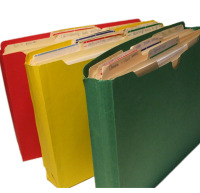
Then scan the other, secondary stuff that won't go into one of your book projects and so will remain digital. Make folders of all those scans, grouping them simply by topic or period. That way, someone else can make sense of them if anything happens to you.

Next comes the fun part: narrowing down your first book project so that it doesn't overwhelm you. Instead of throwing in the whole kitchen sink (or your whole family history) into one book, look at your best scans, and think about what's most important for you to say, and for your family to hear after you've gone. For this first time out, limit yourself to a small book. Cover just four generations, instead of twelve. One do just one branch of the family. Why a smaller project? Because you will finish it.

Write the book simply, in your natural voice, and tell your stories. Utilize lots of the scanned images of your precious family artifacts. This way, you don't have to write as much text and the book will be move along more quickly, because the pictures will help to tell the story. You can always supplement the book with a CD, if you want to include more stuff, without taking the time to write a longer book.

Remember, you’re trying to finijsh this pproject before you “drop dead”. To do that,  you need to set a deadline, say within a year, and work on the book exclusively – expect to giveup your research time until you're done!

This method will also allow you to publish quickly, and to get that book into your family’s hands. They will be delighted! And they will want more. After all your hard work, they will still want more, because what does your family care about? You, and your memories. So, you put one book into their hands, satisfying your original goal, and if your hurry, you’ll live long enough to do another family history book. Even as you write your first, you can plan the second to include the things you didn't get to cover in the first. You'll be more experienced the second time around, and the process will be easier, so the second can be a bigger book.

But first, start with an easy, smaller project, and finish it. You know what they say... "A bird in the hand is worth two in the bush."

How Photos Help to Tell a Story

Biff Barnes

When it comes to placing images in your book, not all images are equal. Nor should all images be used in the same way. One of the most important things to consider in deciding how to place the images in your book is to consider the relationship of the text to the image. How do text and image work together to tell a story? Let’s look at some examples of the kinds of choices you might make in placing photos.
Read More

Seth Godin on Books: Is It All Marketing?

Biff Barnes

When Seth Godin talks, it’s a good idea to listen. But it’s also a good idea to question some of his conclusions. Leo Babuta recently hosted the man American Way Magazine called “America’s Greatest Marketer” on his zenhabits blog for a session titled On the Future of Books: A Discussion with Seth Godin. Godin had just decided to end The Domino Project which he had conducted in partnership with Amazon with the goal of reinventing the way books are created, purchased and read. It was a stimulating and provocative conversation.
Read More

Guide for Memoirists: David Brooks' Life Lessons

Biff Barnes

The holidays are a time when lots of us resolve to get a record of our lives down on paper. That’s great! But before you begin banging away at your keyboard take some time to consider your goals for the book. There are several ways to tell your story. We work with a lot of genealogists who have been researching for years and want to turn their research into a factual chronicle which documents their family’s history. Others are raconteurs who love to spin a good yarn. They are practiced storytellers who want to regale their audience with the best stories from their lives. But others seek to reflect upon the facts or the stories to draw meaning from them and to see what lessons their life experiences have to teach. These are the memoir writers. It is with people from that last category that New York Times columnist and author of the recently released book, The Social Animal: The Hidden Source of Love, Character and Achievement, David Brooks, conducted a project that should interest anyone who cares about memoirs.
Read More

How Do I Find an Illustrator for My Self Published Children’s Book?

Biff Barnes

In our previous post we explored some advice to authors of children’s books seeking an illustrator.In today’s post we’ll explore the question of how to find an illustrator if you plan to self publish your children’s book. Begin by deciding how many illustrations and what size you want. Then decide on you budget for the project. Armed with this knowledge you can begin searching for your illustration.
Read More

How Do I Find an Illustrator for My Children’s Book?

Biff Barnes

In the course of editing and designing books for people we often get questions. One we’ve heard a lot lately is, “Can you help me find a good illustrator for a children’s book?” Like many things associated with creating a book, this question is more complex than it seems. To begin with, you must deal with another question: How do you hope to get your book published? Will you follow the traditional process and submit it to a publishing house or do you plan to self publish? Your answer will take you down one of two very different roads. Today we’ll focus on the road to traditional commercial publication.
Read More

Should Young Children Read Ebooks?

Biff Barnes

Matt Richtel and Julie Bosman of the NY Times reported that many tech savvy adults may love their Kindles, but For Their Children, Many EBook Fans Insist on Paper. They found that, “Print books may be under siege from the rise of e-books, but they have a tenacious hold on a particular group: children and toddlers. Their parents are insisting this next generation of readers spend their early years with old-fashioned books.” Their reasons for limiting children to paper books are based on personal feelings about the reading experience. Other than parental feelings about books is there a reason children are better off with print books than ebooks? Not really.
Read More