Contact Us

Use the form on the right to contact us.

You can edit the text in this area, and change where the contact form on the right submits to, by entering edit mode using the modes on the bottom right. 


Silver Spring, MD
United States

888-577-9342

Stories To Tell is a full service book publishing company for independent authors. We provide editing, design, publishing, and marketing of fiction and non-fiction. We specialize in sophisticated, unique illustrated book design.

Stories To Tell Books BLOG

Filtering by Category: The Author’s Craft

What to Include in a Memoir or Family History Book

Biff Barnes

How do you create a “living” person in a memoir or family history? We’ve talked about several approaches here. Today we’re going to look at some ideas from Phillip Lopate, essayist, writer and poet and author of The Art of the Personal Essay. These thoughts originally appeared in an interview with Lania Knight for the online edition of Poets and Writers Magazine.
Read More

A Chasm for Family History Writers

Biff Barnes

Once the family historian moves beyond what direct sources can tell her the Ancestry Insider’s chasm opens. Finding stories and narrative details becomes more problematic. She must rely on indirect sources, written records. These may be obscure and difficult to locate. The other alternative, when the records don’t materialize, or never existed, may involve speculating from the historical context of the ancestor’s time and place. How does the responsible family historian who wants to stick to the facts do that?
Read More

Capturing Unique Speech in Your Family History

Biff Barnes

How do you capture Great Grandma’s speech in your family history book? She was an immigrant who spoke with a distinctive accent and even a dialect reflecting the neighborhood culture she first experienced in America. Do you simply present her speech in Standard American English and lose the unique style of her dialogue or do you try to capture the peculiarities of her speech in the way you write it.

Charles Carson, managing editor of the Journal American Speech offered some useful advice in a recent post on the Grammar Girl Blog. He cautioned, “To flavor a novel and provide authenticity, authors often use dialect in their written dialogue. But the use of dialect is tricky, and if you don’t use care and sensitivity it may backfire.”

When done skillfully capturing accent and dialect in writing is wonderful. Frank McCourt presents the speech of the Irish beautifully in his Pulitzer Prize winning Angela’s Ashes.

Carson explains, “When we talk about a person’s accent, we’re referring to how they pronounce words. So when Eliza Doolittle [in My Fair Lady] sings, ‘Just you wait, ‘enry ‘iggins! Just you wait.’ She is using Standard English with a cockney accent.”

This works wonderfully for Learner and Lowe in the musical. But it doesn’t work for everybody. Novelist Oakley Hall discusses the danger, “Phonetic spelling may be the easiest way to indicate dialect peculiarities, but it is a crude device. Misspelled words tend to jump off the page and assume undue importance, and apostrophes indicating missing letters take on the appearance of barbed-wire entanglements. The following passage from Stephen Crane’s The Red Badge of Courage is almost unreadable:

Th’ general, he sees he is goin’ t’ take th’ hull command of the 304th when we go in the action, an’ then he ses we’ll do sech fightin’ as never another regiment done.

They say we’re catchin it over on th’ left. They say th’ enemy driv’ our line inteh a devil swamp an took Hannieses battery.’”


“The other option for communicating a character’s accent to readers, which I recommend,” says Carson, “is to use standard spelling along with description of the character’s speech in the text introducing the character. One might write, ‘Her roots in the South were evident in her slow, melodious speech,’ while using standard spelling when writing her speech. This method is much easier for the reader…”

One tool for portraying a character’s unique speech while using standard spelling is to capture the person’s favorite expressions. For example, my mother often said of people , including me, who were not really paying attention, “They are drifting and dreaming.” My father seldom said, “Hurry up.” He preferred to say, “Time’s a wasting.” Favorite expressions can reveal a lot about the people who use them and add color to your family hsitory.

Click here to read Charles Carson's post on Grammar Girl


Creating Imagined Dialogue: Give It a Try

Biff Barnes

In our previous post we discussed  how to create imagined dialogue to enliven your family history book. We looked at

  • How time and place might contribute to what ancestors thought and discussed
  • Imagining the emotions they might have felt
  • Examining retrospectively what motivated them at that time
  • Using what you know about ancestors favorite expressions or style of speech

All of these things can help you to imagine how they would have sounded in a conversation.

Creating imagined dialogue is not as difficult as you may think. The best way to test that statement is to try doing it. To help out I’ll give you two prompts to practice on. You won’t have to think about your own ancestors here. Just imagine a conversation involving the people described in the prompt.

  1. It’s 1937. A husband and wife in Enid, Oklahoma are sitting at their kitchen table of their farmhouse. The country has been gripped by depression for almost a decade. Oklahoma topsoil has been blowing away for almost as many years, creating what has come to be known as the Dustbowl. Several of the couple’s neighbors have lost their farms to foreclosure. The couple fear the same fate. They have just received a letter from a former neighbor who moved to California with her family. After several months of looking for work the neighbor’s husband has found a job as a laborer constructing the massive Shasta Dam just north of the small town of Redding.

Write the dialogue for the conversation the couple might have had.

  1. It’s late 1942. A woman and her neighbor in Ypsilanti, Michigan are sitting at her kitchen table. The United States has entered World War II. Both women’s husbands been drafted into the Army and shipped off to basic training. They will shortly be headed overseas. Some women in the town have already taken jobs at the Willow Run Aircraft Factory. The local radio stations and newspaper are filled with advertising calling upon other women to join those already at the factory. The women want to do their patriotic duty. They are also concerned with their responsibilities as mothers.

Write the dialogue for a conversation the women might have had.

There are no rules for what you should do. Let your imagination take over. We’d love it if you would share your results by posting them as comments. Have fun!


Creating Imagined Dialogue for Your Family History

Biff Barnes

Nancy and I attended the Family History Expo at St. George, Utah over the weekend. We had a great time as we always do at an Expo.

One of the classes we presented is titled A Good Read: Make Family History Books Exciting. Its focus is on how to use family stories to make your book dramatic. We discuss ways family historians can employ techniques of fiction writers in their accounts of their ancestors’ lives. One of the techniques we discuss is using imagined dialogue. We suggest that you can bring your relatives to life by imagining conversations they might have had at key points in their lives.

How do you do that and remain faithful to a factual portrayal of history? Let’s take a look at some of the things that might guide you. First, people live in a particular time and place. This means that they may face some distinctive challenges or opportunities. Begin by trying to understand as well as you can what your ancestors unique location both geographic and temporal would have meant for them. The situation in which they found themselves will have a lot to do with what they might talk about and what they might say.

Next recognize that circumstances lead to emotions. Speculate on what a person living in that time and place might have been feeling. Their speech will reflect the emotional tone of their situation.

People say things because they are motivated to do so. As a historian, you have the benefit of hindsight. You can look back and see what your ancestor did in response to being in a particular situation. Whatever they did, it’s likely that they talked about what they might do, exploring the things that might ultimately have motivated them to take the course of action they chose.

Finally, you may know something about the way you ancestor spoke. For example, maybe you have heard relatives say that great granddad had a favorite expression or two. If you don’t have that kind of direct knowledge, maybe you have letters written by the relative in question or even a journal or diary. These will give you some ideas about their favorite turns of phrase and how they might have liked to construct sentences.

With a little thought and imagination you can combine these things, all of which have a basis in fact, and construct a speculative conversation in which what your ancestor might have said is fairly represented.

In our next post, we’ll offer a writing challenge in which you can try out some of the things we discussed today.


New Books for Memoirists, Family Historians and Self Publishers

Biff Barnes

My bookshelf is stacking up. I have three books that I want to get to in the next few days. You may hear more about them when I do.

The first to arrive is Mark Levine’s The Fine Print of Self Publishing. Levine is the President of Published.com a division of the Hillcrest Publishing Group, Inc. He has researched self publishing options offered by 45 companies. The book’s goal is to help writers choose ethical self-publishing companies and avoid book publishing companies that are nothing more than dream-crushing scam artists.

Tim Bete, Director, Erma Bombeck Writers' Workshop said of Levine’s book, "It would take years for an author to compile all the research that Mark Levine has and, even then, most authors wouldn't be able to analyze the self-publishing companies and their contracts the way Levine does. The Fine Print of Self-Publishing will save time and money with your next self-publishing project."

I am sure this will be a valuable tool to help us in advising clients. I’m sure you see some of that advice here in future posts.
Click here  for more on The Fine Print of Self Publishing

Next, I ran across Piers Steel’s, The Procrastination Equation: How to Stop Putting Things Off and Start Getting Stuff Done at my local public library. After my most recent post, Write a Family History in 28 Days? Maybe!, not to mention my ever lengthening to-do list, and the diet and visits to the gym that I really will start tomorrow, I had to see what Steel, a professor at the University of Calgary, Steel is one of the world’s leading researchers and speakers on the science of motivation and procrastination, has to say.

Library Journal promises, “Why you ‘put off till tomorrow what you can do today’ forms the crux of Steel’s book, in which he not only answers that question but details specific techniques to reign in the impulse. . . . Offers good advice.”  

Let’s hope!

Click Here  for more on The Procrastination Equation

Finally, we’re always looking for examples of memoirs, biographies and family histories that use stories to bring their subjects to life. On a recent visit to the Redding Barnes & Noble (No, we’re not related. Too bad!) we ran across Stacy Schiff’s, Cleopatra - A Life


Schiff is a winner of the Pulitzer Prize for her biography of Mrs. Vladimir Nabokov, Vera.

Margaret Flanagan, Booklist says of the book, “Demonstrating the same narrative flair that captivated readers of her Pulitzer Prize–winning Véra (Mrs. Vladimir Nabokov) (1999), provides a new interpretation of the life of one of history’s most enduringly intriguing women.”

It looks like exactly the kind of creative approach to using literary techniques we like to recommend to memoirists and family historians. Look for a review soon.

Click here for more on Cleopatra.

What are you reading? Post a comment.


Narrative Nonfiction = More Interesting Family History

Biff Barnes

Wow! What a weekend.

We spent Friday and Saturday at the Family History Expo in Mesa, Arizona, where we spent two days talking with enthusiastic genealogists and family historians and presenting classes about creating family history books. It was a great event. We met a lot of wonderful people.

One of the topics often at the center of our conversations was how to use the art of the storyteller to make family history come to life. We found ourselves introducing the techniques of creative or narrative nonfiction to many people faced with a dilemma. They thought they were duty bound to stick to only documented fact, but they also wanted to make their books interesting for their readers. We tried to show them how borrowing methods from literature could help them accomplish both goals.

So, it was a little ironic when I opened my Google Reader this morning and found a post from Richard Gilbert’s Narrative blog on exactly that subject.

Gilbert had run across an old copy of an article, “A Brief Introduction to Narrative Nonfiction,” by Pulitzer Prize winning journalist Edward Humes who has written 10 books of narrative nonfiction.

Edward Humes

One of the things we talked about at length this weekend was how getting away from straight chronological organization could make stories more interesting. Here was Gilbert providing two examples of how Humes explained his rationale for doing just that.

Here they are:

I hated the fact that Bill Leasure, the corrupt LAPD traffic cop in my second book, Murderer with a Badge, chose murder as his first crime. Only later did he segue into stealing a few million dollars worth of yachts. Chronicling events in that order would have been anticlimactic. So I abandoned any pretense of a chronological structure, and started the first chapter with Leasure aboard a stolen boat. The murders unfolded later in the book, in a section that dealt with an earlier period in Leasure’s life. Then the narrative jumped forward again to a time after the yacht thefts, when those unsolved murders were finally linked to Leasure by the police. That kept the tension in the narrative building, though structurally it was kind of messy—like my main character’s life.

Finding the right structure for No Matter How Loud I Shout, my juvenile court book, was even more challenging, as I was weaving together an ensemble of characters with different story lines that only occasionally intersected—a kind of literary version of Hillstreet Blues or ER. Yet these varied threads had to build toward some sort of critical mass and shared climax in order to make sense. Finding those intersection points was not a matter of clever writing. It was a matter of being there, day after day, haunting the courtrooms, the juvenile hall, the offices of the prosecutors and public defenders and judges. In the end, I have found, even the most thorny sorts of questions about structure and character development end up being less about writing technique, and more about reporting technique. Narrative nonfiction requires authors to immerse themselves in their subjects, to painstakingly (and sometimes painfully) interview characters, research place (past, present and future), and reconstruct dialogue (spoken and interior).

That final sentence is great advice to family historians seeking to create more interesting books.

Click here to read Richard Gilbert's post on Narrative.


Lessons for Family Historians from Paul Theroux’s "The Trouble With Autobiography"

Biff Barnes

In 2500 rather turgid words on Smithsonian.com, American travel writer (The Great Railway Bazaar) and novelist (Mosquito Coast) Paul Theroux tells us The Trouble With Autobiography.


He begins with a short account of his own family history, a terse, factual summary of several generations. He then states, “And these 500-odd words are all I will ever write of my autobiography.”

I am sure Theroux didn’t mean for his brief sketch of his family history to be interesting. He was making a point about why he wouldn’t write one of any greater length.

Theroux’s foray through the genre isn’t all that interesting on its own terms, but it does offer a couple of unintended lessons for family historians. Unfortunately, many drafts produced by novice family history writers resemble Theroux’s abbreviated account. They reduce people’s lives to lists of facts, rather than capturing the stories behind the facts.

Let’s examine a paragraph from Theroux’s summary:

My maternal grandparents, Alessandro and Angelina Dittami, were relative newcomers to America, having emigrated separately from Italy around 1900. An Italian might recognize Dittami (“Tell me”) as an orphan’s name. Though he abominated any mention of it, my grandfather was a foundling in Ferrara. As a young man, he got to know who his parents were—a well-known senator and his housemaid. After a turbulent upbringing in foster homes, and an operatic incident (he threatened to kill the senator), Alessandro fled to America and met and married my grandmother in New York City. They moved to Medford with the immigrant urgency and competitiveness to make a life at any cost. They succeeded, becoming prosperous, and piety mingled with smugness made the whole family insufferably sententious.

Just look at the untold stories! His grandfather’s “turbulent upbringing in foster homes’; the “operatic incident’; his grandparents’ meeting in New York City; and, the story of how they made a life. To bring these people to life, a family historian would have to tell these stories. It is the stories that will draw readers into a family history.

Interviews with living relatives and close examinations of family documents provide windows into the family lore that provide the researcher with the stuff of stories. Yet there’s another lesson to be learned from those stories in Theroux’s piece. It’s good to conduct your interviews and research with a degree of skepticism.

Why? Theroux quotes Rebecca West, the English journalist and literary critic, who said, “Everyone realizes that one can believe little of what people say about each other. But it is not so widely realized that even less can one trust what people say about themselves.”

A family historian seeking the truth about her ancestors may need to look carefully into the margins of what they wrote and said about each other and about themselves.

Click here to read Paul Theroux’s The Trouble With Autobiography


Memoir and Family History as Stories Well Told

Biff Barnes

A reader of the Ask the Book Doctor Blog recently asked, “What's the difference between narrative nonfiction and memoir?”


It's an important question for family historians as well as memoirists.


Bobbie Christmas, book editor, author of Write In Style (Union Square Publishing), and owner of Zebra Communications responded, “All memoirs [family histories] and biographies are considered narrative nonfiction...”


For authors seeking contracts terminology is important. Slotting the book – the industry term for how to market the book and shelf it in the bookstore – is essential in pitching a book to an agent or publisher.


For authors who are planning to self publish the term is not so critical, but what is important about what it says about what makes a good memoir or family history.


The key word is narrative. Merriam – Webster online say it's “the representation in art of an event or story.” Too often memoirists and family historians see themselves as writing a historical record, or as just reporting the facts. As a historian myself, I would suggest that the narrative style of a writer like David McCulloch or Barbara Tuchman a generation earlier, who present history as a story is far more pleasing to readers than authors who employ a purely factual, academically reportorial style.


Christmas advises, “Well-written memoirs [and family histories] include vignettes or scenes with beginnings, middles, and ends and include action, dialogue, narrative, settings, and other elements of fiction to make readers feel as though they are watching the story unfold.”


The family historian who tells the stories that lie behind the facts of pedigree charts and GEDCOM files can draw readers into her account. That's why genealogy research should always be accompanied by the search for family stories to bring ancestors to life. It's also why we often advocate employing the techniques of creative non-fiction to make tell those stories more vividly.


A Conference For the Family Biographer

Biff Barnes

I just ran across a conference I'd love to attend. The Compleat Biographer, a daylong event sponsored by the Biographers International Organization, is scheduled for May 21, 2011 at the National Press Club in Washington D.C. It sounds like a session that family historians might enjoy. The conference schedule offers sessions under four broad headings – Research, Writing, PR / Marketing, and Topics. I've already got my choices picked out. I'd attend “Dealing With Black Holes in Your Subject's Life,” the “Role of Fiction in Biography,” “Dealing With Copyright, Fair Use, and Estate: Tips and Trapdoors,” and “What You Need to Know About E-Books.” The organizers have set up opportunities to participate in research workshops preceding the conference at the Library of Congress and the National Archives.


The National Press Club, Washington D.C.


If you're looking for a last minute holiday gift for the biographer in your family, how about a ticket to D.C.?


Click here to read more about The Compleat Biographer.


Factual Family History - What Gets Lost?

Biff Barnes

Novelist Suzanne Berne’s new book Missing Lucile chronicles her search for meaning in her family’s history.

The experience is one that is not unfamiliar to genealogists and family historians. It might also be a cautionary tale they would be well to examine.

At the heart is her grandmother, Lucile, who died of cancer in her early forties. However, her father, a very young boy at the time, always believed that his mother had abandoned him. He said, “We were told she was gone. No one ever said where.”

Berne decides that her missing grandmother is "the Rosetta stone by which all subsequent family guilt and unhappiness could be decoded.” She sets out to unlock the family secrets by discovering what she can about Lucile’s story.

The result leads Julie Myerson, British novelist, columnist for the Financial Times and book reviewer for the BBC2’s Newsnight Review, to comment in her New York Times Book Review, “…this is my kind of book. Why, then, did I find it so arduous?”

The answer lies in Berne’s decision to tell the story not as a novelist but as a journalist or historian might do it. She commits herself to creating a factual account of the family’s history. She does imagine what might have happened or have been said, on occasions where all of the facts can’t be discovered. But each time, she stops the narrative to tell her reader what she’s doing.

The string of cautions and qualifiers leads Myerson to say, “I began to dread the sight of another lumpen passage dotted with Berne’s increasingly repetitive what-ifs and perhapses.”

That’s too bad. There is another way.

As Myerson commented, “Berne has said that she originally thought of writing her grandmother’s life as a novel, and you can see why. She’s a first-rate fiction writer, and the passages where she quits her detective-style ruminating and allows herself to bounce off on some imaginative tangent are by far the most vivid and successful in the book. Skies and flowers burst to life. History turns from black and white into Techni­color. You can smell the air, feel the breeze on your cheek. People have conversations that sound credible and alive. Who cares if they didn’t happen exactly as they’re written?”

This is a lesson for family historians. Family history is not academic history. The goal is to bring ancestors to life, and draw the reader into your book, by telling their stories. The factual record may not tell a person’s whole story. It’s incomplete, with gaps that can only be filled by using inference and imagination to round out the story. That process is the basis for a relatively new literary genre - creative non-fiction.

We can see the genre as it has been employed by masters in books like Tom Wolfe’s The Right Stuff, Norman Mailer’s The Executioner’s Song, Joyce Carol Oates’ On Boxing and George Plimpton’s Paper Lion.

Lee Gutkind, author and professor at Arizona State University, who Vanity Fair dubbed “the Godfather” of the creative non-fiction movement explains, “Although it sounds a bit affected and presumptuous, “creative nonfiction” precisely describes what the form is all about. The word ‘creative’ refers simply to the use of literary craft in presenting nonfiction—that is, factually accurate prose about real people and events—in a compelling, vivid manner. To put it another way, creative nonfiction writers do not make things up; they make ideas and information that already exist more interesting and, often, more accessible.”

When you write your own family history consider employing the techniques of creative non-fiction to tell your family’s stories. It will make the experience for your readers much more lively and interesting than relying only on what can be drawn from the facts. You can preserve the documentation by listing source material for the factual record in an appendix, for those who want to read it.

Click here to read Julie Myerson’s review of Missing Lucile.

Click here to read Lee Gutkind’s article What is Creative Non-Fiction?


What Do Readers Want?

Biff Barnes

Would you like to know how to make your book more appealing to readers? Would it help the revision and editing process if you knew which sections of the book readers found most interesting and which they skipped over?

Tools to answer questions like these may soon be available on Scribd, a social publishing website sometimes called the You Tube for documents. Visitors can browse millions of documents or “upload your PDF, Word, and Power Point docs to share with the world’s largest community of readers.”

Scribd CEO Trip Adler recently announced that the site would offer a free tool, Scribd Stats. The new statistics will provide, he said, “new data on reading that’s never been available before."


Jason Kincaid of Tech Crunch described some of types of data available with the new package including:

  • Data on search queries that led people to your document
  • Data on what people are searching for within your document
  • Graphs that allow you to track your document’s popularity over time
  • Data analyzing Scribd’s Read Cast feature which let’s readers share content they’ve just read on Facebook or Twitter

 “Perhaps the most interesting feature of the new Scribd Stats package is the heat maps that will run down the side of each document…,” said E.B. Boyd of Fast Company. [see image above] “The heat map represents the entire document. Red indicates pages that users spent the most amount of time on, blue the least. Clicking on a section of the heat map takes you to that particular page in the document.”

Ann Westpheling, Scribd’s new strategic partnership manager who recently joined the company after 11 years in publishing marketing, said…“If I create an excerpt with material from three romantic novels, I can now see which author drove the most traffic. Experimentation [with different marketing strategies] becomes more meaningful.”

The implications of the new data are potentially enormous.

Boyd said, ”The stats could provide insight into how long people read different kinds of material--leading, perhaps, to new optimal lengths for different genres of books--as well as how reading speeds vary by day of the week or by age of reader--which could also lead to changes in how authors write.”

Click here to read Jason Kincaid’s Tech Crunch article. 

Click here to read E.B. Boyd’s Fast Company article.

Click here to visite the Scribd website. 


Is a Writing Group for You?

Biff Barnes

Writing can be a solitary task. Sometimes it is difficult to get a good perspective on the manuscript you’re producing. One solution is to seek out other writers and join with them in a writing group or workshop.

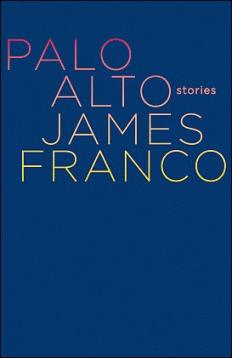
A recent interview between Kate Bittman of the New Yorker and actor James Franco, star of films like Milk, Pineapple Express and Howl. Their conversation which appeared in the magazine’s online Book Bench focused on Franco’s newly released story collection Palo Alto.

Franco said he had written for years, but had only recently begun showing his work to others. When asked, what was the best advice about writing he had ever received, he said, “I suppose it’s finding good mentors and good readers; people who will give you a good sense of what you’ve written, because you can’t always assess it on your own.”

About five years ago Franco discovered writer’s workshops when he could feedback from fellow writers about how to sharpen his writing skills.

“Once I started enrolling in writing workshops and had people reading my work, it immediately gave me a new perspective," he said. "I was suddenly writing to communicate with others, which made all the difference. I no longer cut corners. I could no longer judge my work by its potential. Instead, I had to listen to how it was being perceived by others. I could no longer fool myself in isolation.”

The advice and support provided by members of a writer’s workshop can make the difference in whether a project gets finished or not. It can almost certainly make the manuscript you ultimately create better.

You can locate online groups or groups in your neighborhood with a quick Google search.

Click here to read Kate Bittman’s interview with James Franco.


Facts and Imagination in Memoir and Family History

Biff Barnes

In writing a memoir or family history is your goal a factual retelling of your memories of your life story or those of your ancestors? Or is it to imagine what it must have been like to be a particular person living at a particular time and place? Is your goal to write a personal history or a piece of creative non-fiction or to blend the two?

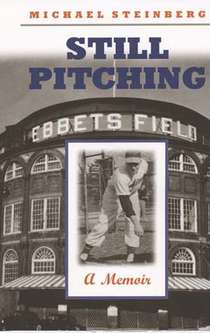
Richard Gilbert in his blog Narrative uses a recent interview in The Writer’s Chronicle to explore these questions.  Faye Rapoport Des Pres conducted the interview with Michael Steinberg, author of Still Pitching, a memoir of growing up in New York in the 1950s.


At the core of a memoir [And I believe a family history as well.] are facts often based on extensive research. Says Steinberg, “Memoirs are set in real time and in real places, and they include real people and real events. Whatever else we think of the form, none of us would be inclined to trust a writer who fabricated those things. It goes without saying that a memoirist’s credibility, like the journalist’s, rests in part on those things that can be verified, even fact checked.”

But the memoirist or family historian must make an important decision about what to do with the facts. Are the facts a limit or a point of departure?

In Steinberg’s view a writer needs to add creative elements to the facts to get at the real story. He said, “…in my memoir Still Pitching I needed to re-imagine my childhood in order to better understand it. This was the only way I could express and articulate what it felt like to be that kid growing up in New York at that particular time in history (the ‘50s). In order to understand your past—in my case, childhood—you have to be able to imagine that past and the person you once were.

Choosing that course may depart from the strictly factual.

But by using the facts of the historical context in which the people about whom you write lived, you stand a much better chance of using you imagination to bring them to life for your reader.

Click here to read Richard Gilbert’s full post on Narrative.

Topical Organization for a Family History

Biff Barnes

Best-selling author Bill Bryson (Mother Tongue, Made in America: A Short History of Nearly Everything) has written a new book that might be of interest to people planning a family history.

The New York Times recently reviewed Bryson’s newly published At Home: A Short History of Private Life. Says reviewer Dominique Brown, “Bryson’s focus is domestic; he intends, as he puts it, to ‘write a history of the world without leaving home.’” The book is organized around the rooms of Bryson’s house. “Moving from room to room, talking while we walk…” he touches on such disparate topics as antique parlor chairs, buttons, vitamins, stairs as a cause of fatal accidents, the Erie Canal, Ben & Jerry’s ice cream, the history of ice, Building materials, the numerous words important into English when India dominated the cotton trade, pillows, petroleum, and guano as fertilizer.

“Bryson’s conceit is nifty, providing what business majors might recognize as a “loose-tight” management structure,” said Brown, ”flexible enough to maintain a global scope without losing track of the mundane.”

It’s that organizational structure that can be useful for a family historian looking for an alternative to lock-step chronology. Whether frustrated by a shortage of stories to supplement the genealogical facts about some ancestors or simply looking for a more interesting way to relate the family history, topical organization can be a useful tool.

A book might be organized around

  • Life experiences such as occupations, education, child raising, military service, migrations (everything from the stories of immigration to America to moves across the country or across the street) or food.
  • Values like courage, intelligence, sense of humor, creativity, persistence, hard work
  • Character traits including courage, intelligence, sense of humor, creativity, persistence, hard work

Whichever topics around which you decide to organize your family history you will be able to add interest by using the historical context of the time and place in which ancestors lived to supplement their stories.

Click here to read the full review of At Home: A Short History of Private Life.